Towards a Socially Inclusive Circular Economy: Evidence From Social Enterprises in Low- and Middle-Income Countries
Maria L. Granados and Adeyemi Adelekan
Business Strategy and the Environment | May 2025
Summary
Circular economy (CE) and social entrepreneurship are increasingly recognised as critical pathways for sustainable development, yet CE research often underplays social inclusion, particularly in low- and middle-income countries. This paper examines how organisations engaged in circular practices achieve social inclusion in practice.
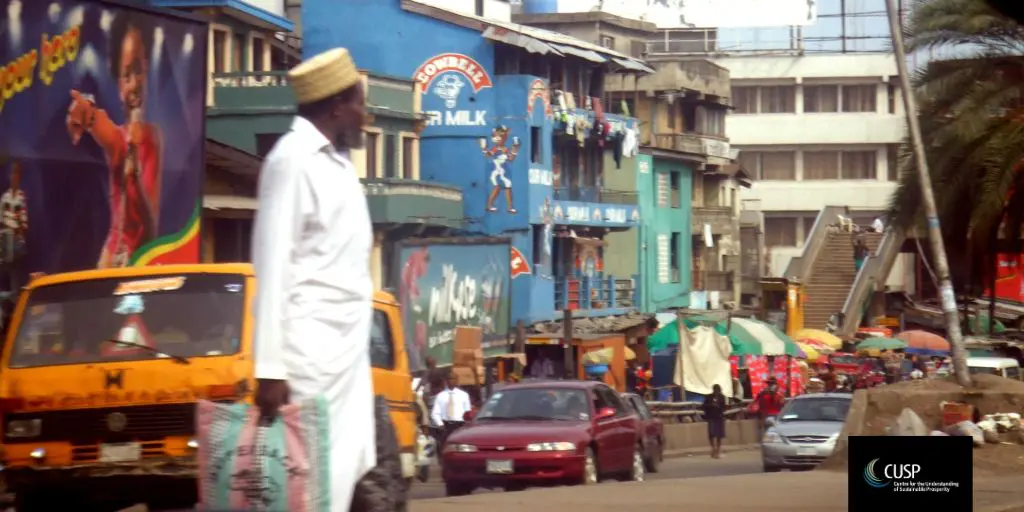
Drawing on a qualitative multiple case study of waste management organisations in Lagos (Nigeria) and Bogotá and Cali (Colombia), Maria L. Granados and Adeyemi Adelekan analyse how empowerment is embedded within circular activities. Their findings show that organisations integrate agency-building processes and opportunity structures into recycling, reducing and rethinking strategies, thereby enabling marginalised actors to access services, gain recognition and participate in economic and civic life.
The authors propose a socially inclusive circular economy framework, that conceptualises social inclusion as an outcome of circular practices mediated by empowerment.
The paper is available in open access format via the Wiley website. If you have difficulties accessing the paper, please get in touch: info@cusp.ac.uk.
Citation
Granados M L and Adelekan A 2026. Towards a Socially Inclusive Circular Economy: Evidence From Social Enterprises in Low- and Middle-Income Countries. In: Business Strategy and the Environment, May 2026. https://doi.org/10.1002/bse.70940.