
PUBLICATIONS
As our work progresses, publications are arising from our research themes and cross-cutting projects. We produce working papers, journal articles, evidence submissions to government enquiries, essays, books and book chapters. Subscribe to our newsletter to receive a monthly digest in your inbox. If you want to hear more frequently from us, you can subscribe to email updates from the website directly.
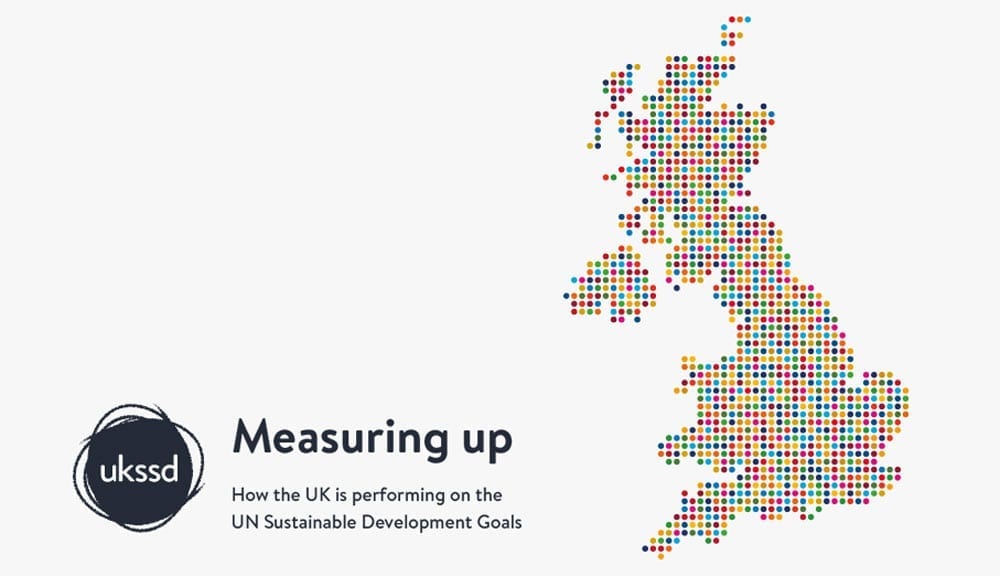
UKSSD publishing first comprehensive assessment of the UK’s performance against the SDGs. With support from CUSP on SDG 17, highlighting a significant danger of the UK quality of life getting worse if action is not taken.

There has been an increasingly common trend in the UK to identify character skills and traits as the basis for various individual successes and achievements. In education policy and employment services, character has been linked to the making of successful, morally aware, employable and socially mobile citizens. This article explores the late-19th-century use of character discourses, focusing on the economist Alfred Marshall.
This paper aims to contribute towards the development of a political economy of work fit for purpose in a world of social and environmental limits. In order to get beyond today’s dominant conceptions of work in a growth-based capitalism, Simon Mair, Angela Druckman and Tim Jackson explore the role of work in historical utopias.
Sluggish recovery in the wake of the financial crisis has revived discussion of a ‘secular stagnation’. These conditions have been blamed for rising inequality and political instability. Tim Jackson contests this view, pointing instead to a steadfast refusal to address the ‘post-growth challenge’.

The requirement to reduce emissions to avoid potentially dangerous climate change implies a dilemma for societies heavily dependent on fossil fuels. As renewable capacity requires energy to construct there is an initial fossil fuel cost to creating new renewable capacity. An insufficiently rapid transition to renewables, it turns out, will imply a scenario in which it is impossible to avoid either transgressing emissions ceilings or facing energy shortages.

Tim Jackson’s chapter in The Cambridge Handbook of Psychology and Economic Behaviour has been updated for the second edition of the international, multi-disciplinary and partly new collection, edited by Alan Lewis. It summarises the challenge inherent in recent policy debates about sustainable consumption, focusing in particular on what might be involved in negotiating the kinds of lifestyle changes that are implied by the radical reductions in carbon emissions that are required to mitigate climate change.

Piketty argued that slow growth rates inevitably lead to rising inequality. If true, this hypothesis would pose serious challenges for a ‘post-growth’ society. Fiscal responses to this dilemma include Piketty’s own suggestion to tax capital assets and more recent suggestions to provide a universal basic income that would allow even the poorest in society to meet basic needs.

It is widely acknowledged that GDP is not a suitable measure of economic welfare. In this paper, Simon Mair, Christine Corlet Walker and Angela Druckman propose a novel framework for indicator development: the ‘Theory of Change’ approach — a causal model approach in which the relationships between system inputs, activities, outputs and outcomes of the economy are explicitly articulated, and can be used to identify theoretically sound indicators for economic welfare.

This paper focuses on the role of the public sector in addressing finance gaps for longer-term investment requirements from seed investment through to early growth commercialisation of green innovation activities. Peer reviewed literature is identified from international studies, complemented by illustrative policy documents where evidence of impact is reported.
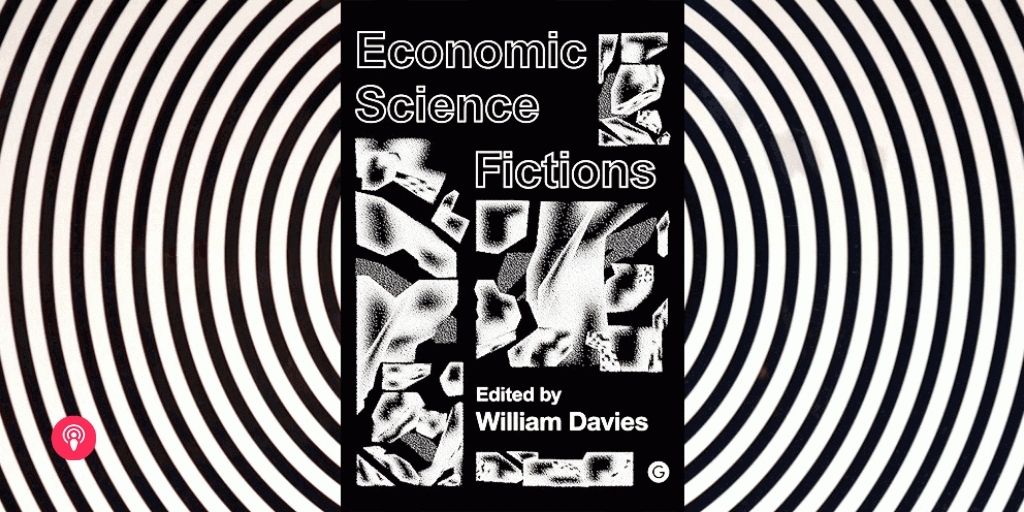
From the libertarian economics of Ayn Rand to Aldous Huxley’s consumerist dystopias, economics and science fiction have often orbited each other. In Economic Science Fictions, CUSP co-investigator Will Davies has deliberately merged the two worlds, asking how we might harness the power of the utopian imagination to revitalise economic thinking.

Strategic government intervention can maximise opportunities for private green infrastructure investment, our ‘Investing in the Future’ project report with the Aldersgate Group finds, setting out a full list of recommendations for government and industry.

The purpose of this paper is to prepare the ground for a strand of work in CUSP which aims to look at the role of culture in everyday life, and in doing so to understand how it might operate as an element of sustainable prosperity. The paper considers the basis on which we might start to think about new legitimations for cultural policy and a fuller understanding of its potential for living well with less.

This paper analyses the potential for cultural work to encourage alternative visions of the “good life”, in particular, how it might encourage a kind of “sustainable prosperity” wherein human flourishing is not linked to high levels of material consumption but rather the capabilities to engage with cultural and creative practices and communities.

On 16 January 2018, CUSP research fellow Alex White gave evidence to the Environmental Audit Committee on their green finance inquiry. Based on our research with the Aldersgate Group, Alex White argued for the need to create an attractive low carbon investment environment in the UK if we are to see the real benefits of a growing green finance industry.

As part of a new compilation of groundbreaking work on social indicators, Simon Mair, Angela Druckman and Tim Jackson have contributed a chapter examining how globalisation since 1990 has shaped fairness in the Western European clothing supply chain.

As environmental crises become ever more severe, calls for authoritarian solutions are reappearing: Democracy, so the argument goes, has proven to be too slow to respond to urgent threats. In this paper, Marit Hammond and Graham Smith respond to this charge by revisiting the role of democracy within a transition to sustainable prosperity.

Edited by Geraldine Brennan, the second series of Climate Innovation Insights shares understanding of how to nurture and sustain cross-sector collaboration to scale up the circular economy and Accelerate the transition to sustainable production systems.

In their new paper for the Journal of Consumer Ethics, Kate Burningham and Sue Venn suggest there is a need for greater attention to the gender and relational dimensions of environmentally sustainable practice, and for promotion of holistic discourses of sustainable consumption which align sustainable living with the maintenance of family life.

The idea that lifecourse transitions might offer ‘moments of change’ in which to encourage more sustainable consumption is popular, yet insights from the sociological literature on lifecourse transitions have rarely been brought to bear on this assumption. This paper focuses on two distinct lifecourse transitions – becoming a mother and retirement – and through qualitative longitudinal research evaluates the assumption that such periods provide opportunities for movement to more sustainable consumption.

The language of capital penetrates social and environmental policy discussions at local, national and international level. Yet its appeal, John O’Neill argues, is premised on a fundamental misunderstanding of prosperity. The treatment of nature as capital is not a solution to the problems of environmental loss. Rather, it is part of the problem.

How do young people see the world? What are their hopes and aspirations for the future? What does the ‘good life’ mean for them in an age of environmental and social limits? These are some of the questions that motivate the CYCLES project which we are launching with this report.

Sustainable prosperity is underpinned by the principle that value creation and increased quality of life can both be decoupled from resource use – making the circular economy a key aspect. In this blog, CUSP research fellow Geraldine Brennan summarises some of her recent findings.

In the fifth essay in our series, Ruth Levitas argues that thinking about our ethical responsibilities in the present and for the future is helped by looking through the lens of Utopia. The Utopian approach allows us not only to imagine what an alternative society could look like, but enables us to imagine what it might feel like to inhabit it.

Is it possible to lead rich and good lives that are simultaneously just and ecologically sustainable? Yes, Ingrid Robeyns argues in the fourth of our CUSP essay series on the morality of sustainable prosperity, if we understand well-being and human flourishing in terms of human capabilities.
The publication of Prosperity without Growth was a landmark in the sustainability debate. This substantially revised and re-written edition updates its arguments and considerably expands upon them. Tim Jackson demonstrates that building a ‘post-growth’ economy is not Utopia—it’s a precise, definable and meaningful task. It’s about taking simple steps towards an economics fit for purpose.

The nature of work has divided thinkers across the fields since the Industrial Revolution. In his Marxian take on the meaning of work, John Bellamy Foster argues that the real potential for any future sustainable society rests not so much on its expansion of leisure time, but rather on its capacity to generate a new world of collective work.

In October 2016, the National Infrastructure Commission has launched a 15 week call for evidence to provide input into the development of its National Infrastructure Assessment. The Centre for the Understanding of Sustainable Prosperity responded.

Can we create communities that are both prosperous and sustainable? And can we do this while retaining democratic procedures? These are huge questions and, like others who have addressed them, Roger Scruton is by no means convinced that he has a persuasive answer. But an answer is more likely to be found, he argues, “in the legacy of conservative thinking, than by adopting the standpoint of the top-down plan.”
The field of ‘moral economy’ explores the ways in which seemingly amoral economic institutions are normatively and politically instituted. However it has tended to neglect the question of how economic actors make commitments to the long-term future, of the sort that are implied by the idea of ‘sustainable prosperity’. Anthropocenic utopias are urgently required.

Whose job is it to save the planet? Apart from a very few people the task is not in anyone’s job description. Yet, to achieve sustainable prosperity, we can’t afford to hide behind the permissions attached to our professional roles as they now stand, argues Melissa Lane in the first essay of our CUSP essay series on the morality of sustainable prosperity.

This paper explores the use of instability indicators developed in statistical physics to analyse the stability of the GDP within national longitudinal datasets. From our early results it is suggested that they may provide invaluable insights into the inter-decadal dynamics of the macro-economy, providing potentially useful insights into (e.g.) the nature of the business cycle, secular stagnation and the restoring forces of the economy.

On 26 May 2016, the National Infrastructure Commission published a consultation on the process and methodology for putting together the UK’s first National Infrastructure Assessment. CUSP responded.

The use of quantified indicators for the implementation and measurement of social progress is a well-established policy tool. However, any form of ‘social progress’ is inherently contested and a meaningful application of indicators in such contexts poses numerous challenges. In this paper we explore how indicators might be used to research and implement sustainable prosperity.

In July 2016, the House of Commons Environmental Audit Committee has launched an inquiry into domestic implementation of the UN Sustainable Development Goals (SDGs) to which the Centre for the Understanding of Sustainable Prosperity responded.

This paper explores the ramifications of the combined crises now faced by the prevailing growth-based model of economics. In paying a particular attention to the nature of enterprise, the quality of work, the structure of investment and the role of money, the paper develops the conceptual basis for social innovation in each of these areas, and provides empirical examples of such innovations.

Understanding sustainable prosperity is an essential but complex task. It implies an ongoing multidisciplinary and transdisciplinary research agenda. This working paper sets out the dimensions of this task. In doing so it also establishes the foundations for the research of the ESRC-funded Centre for the Understanding of Sustainable Prosperity (CUSP).