BLOG
Proximity and distance have taken on new meanings during the course of the pandemic; and has facilitated connections that in normal times would have been unlikely. While they have never met in person, seeing as they are based on opposite sides of the world in California and Abu Dhabi, Lia Papazoglou and her co-founder Erika Spagakou united behind a common vision for a sustainable future for Greece and have spent the past year turning it into a reality.
The UK government is about to reform social care, but the focus is likely to be on funding, not the companies that are allowed to have a stake in the sector, christine Corlet Walker writes, summarising her recent work together with Tim Jackson and Angela Druckman on ‘Careless Finance. This blog first appeared on The Conversation.

Using semi-structured interviews and literature reviews, CUSP researchers Will Davies and Nick Taylor assess the ambivalent moral economy of the ‘Financial Independence/Retire Early’ (FIRE) community, trying to understand how and why individuals seek this unusual relationship to capitalism, that pursues the status of rentier through the strategic rejection of materialism. This blog summarises the main findings, connecting them to some of the elite lifestyle changes that have been triggered by the Covid-19 pandemic.

Over the coming months, Dr Malaika Cunningham, CUSP research fellow and Practice Researcher at Artsadmin, will be writing a monthly blog series entitled ‘Collecting Real Utopias’. In this first blog of the series, Malaika introduces the motivations and ideas behind the series, and offers a taster of what’s to come.
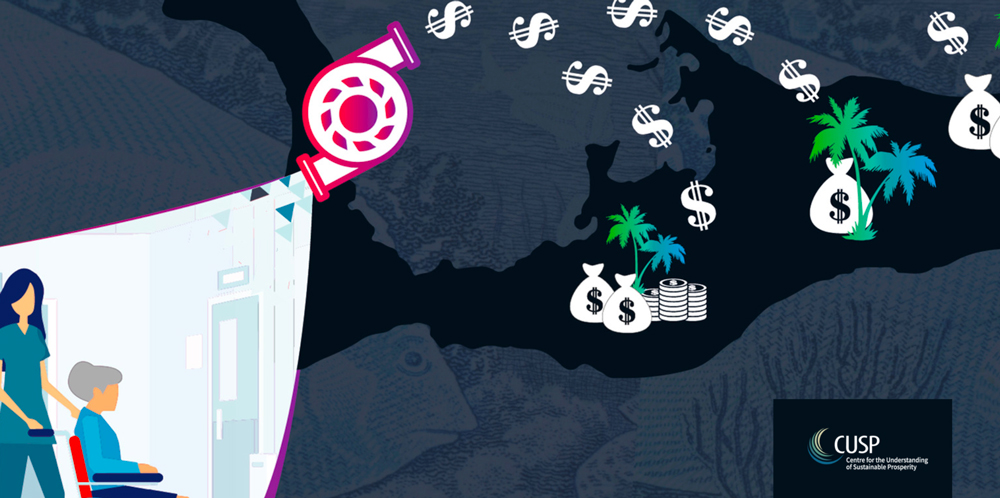
Following the money that flows through the social care system, a new CUSP paper demonstrates how private equity firms have stacked some care home chains with shocking levels of debt and stripped them of their assets, likely creating in the process a level of economic precarity that threatens the stability of the whole sector. This blog is summarising the main findings.
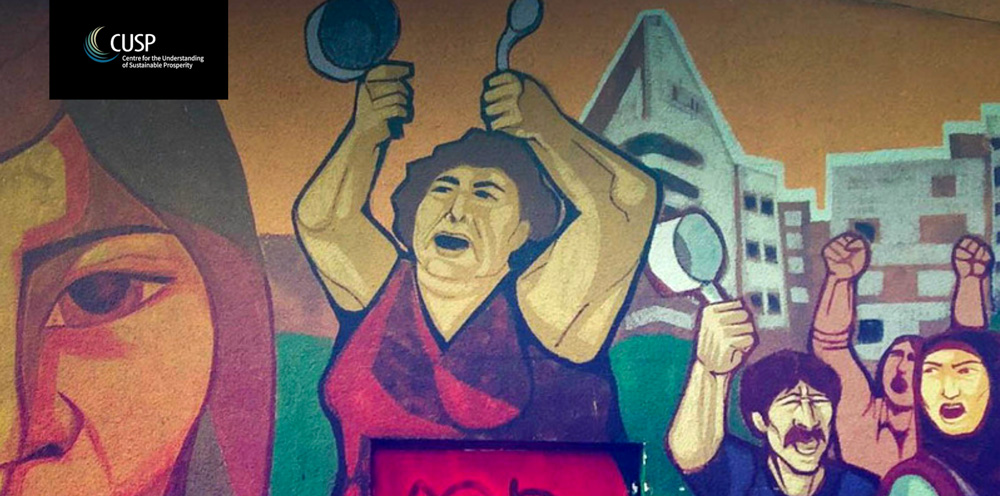
In the wake of recent Extinction Rebellion’s and #BlackLivesMatter protests, the UK government has brought forward a new bill, designed to place significant restrictions on protest rights. A worrying development, CUSP fellow Graeme Hayes writes, “rather than free speech, the only public voice that we will be left with is the voice of power.”
The idea of the economy as a cross between a dependent child and vengeful god, CUSP researcher Dr Simon Mair writes, emerges from the stories we tell ourselves about what the economy is and what it could be. We need to reclaim that story, he finds. Only once we understand that the economy is inherently social and material can we begin to think about changing it.

At a time of climate emergency and rapid biodiversity loss, the need for transformation to a more sustainable economy and society becomes ever more urgent. Rapid change requires social innovations of different types and at different scales, Prof Fergus Lyon writes ahead of the #ISIRC2021 conference—a just transition cannot be a top-down endeavour but needs community level initiatives and actions.

It’s important to celebrate when miscarriages of justice are overturned, CUSP researchers Graeme Hayes, Brian Doherty and their colleague Steven Cammiss write, but the wider implications of the recent ‘Stansted 15’ ruling are far from encouraging.

Tim Jackson summarises the recent TRansit project which has pioneered a novel agent-based, stock-flow consistent macro-economic model. Tim discusses the findings from the project and sets them in the context of the Bank of England’s work on ‘transition risk’.

The constant refrain to Build Back Better will mean nothing unless we are able to account for the impacts of our investments and decisions on addressing our entrenched individual and spatial inequalities, and broadly shift to a more preventive health agenda, John Lotherington writes in this guest blog. It is high time that we take a longer term and more holistic view of the nation’s health and wellbeing.
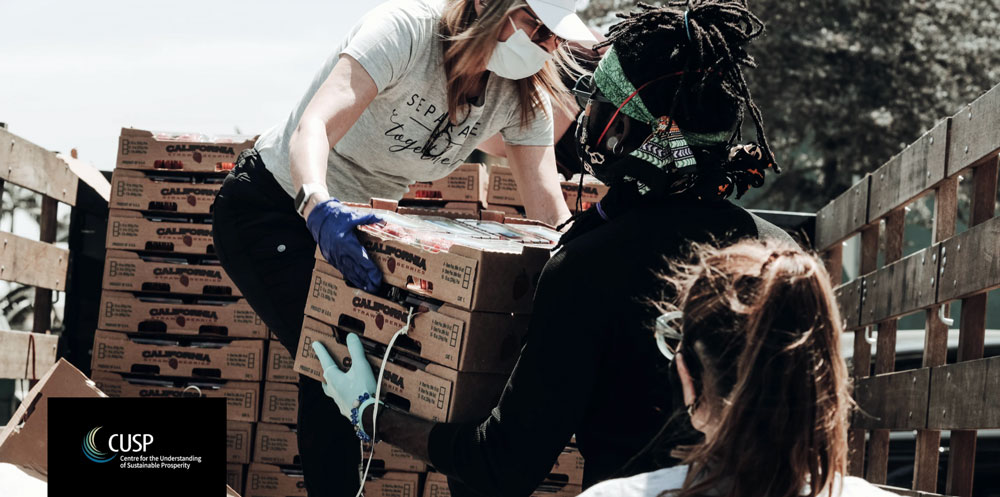
When the economy dips, needs rise and the resources open to charities dip too. What we need is a system that is effective at stopping this ‘scissors effect’ and at meeting needs, not just where, but when they arise, Chief Executive of Pilotlight and former CUSP advisor, Ed Mayo, argues in this guest blog. This blog first appeared on the New Philanthropy Capital website.
A new cross-sector work programme has been launched by CUSP researcher Aled Jones together with the Institute and Faculty of the Actuaries, to take forward a series of activities including think pieces, webinars and external engagement to ensure the proactive engagement of the actuary profession with the importance, perils and impacts of global biodiversity risks. This blog is outlining the agenda.
Since the first lockdown, CUSP researcher Mark Ball’s cultural engagement has almost always been through a screen, and mainly his laptop screen. Here are some reflections on one regular avenue for comfort and now concern: montages of talent show success on YouTube.
A new report by CUSP researchers as Middlesex University takes a holistic view of the UK cleantech finance ecosystem, drawing on the experiences of contemporary young cleantechs, investors, government policymakers and support agencies. In this blog Theresia Harrer and Robyn Owen outline their findings.

The global Covid-19 pandemic is affecting people’s lives across the globe. A team of researchers at Middlesex University, a CUSP partner institution, is conducting a project exploring the potential effects of dance on well-being and on our professional life across cultures. If dance is part of your life, please consider answering the survey at the bottom of the page.
CUSP researcher Birgitta Gatersleben leading a set of environmental psychology studies that investigate how Covid-19 restrictions have affected nature engagement and thus people’s health and wellbeing. The findings are expected to highlight the importance of a green recovery from the Covid-19 pandemic.

The UK’s education system is far short of being fit for purpose for the goals we now must meet, Joan Walley writes: As wide scale skills deficits needs to be urgently tackled to get to net zero, our latest briefing with the Aldersgate Group is well positioned to “become the standard ‘textbook’ for all stakeholders in education, business and Government.”
Remaining within the ecological and resource constraints of a finite planet requires substantial reductions in the rate at which individuals consume. But how can we best encourage people to adopt more sustainable behaviours and who is best placed to encourage these changes? Summarising their recent journal article with Birgitta Gatersleben, Patrick Elf and Amy Isham consider whether businesses can act as drivers of pro-environmental behaviour change amongst their customers.

Businesses want to be more productive, but do not always know how to improve. A recent review from CUSP highlights how different approaches have very different implications for businesses, their employees and the planet. In this blog, Amy Isham from CUSP and Helen Fitzhugh from the PrOPEL Hub reflect on three common ideas about pursuing productivity growth and what these different approaches mean in practice.
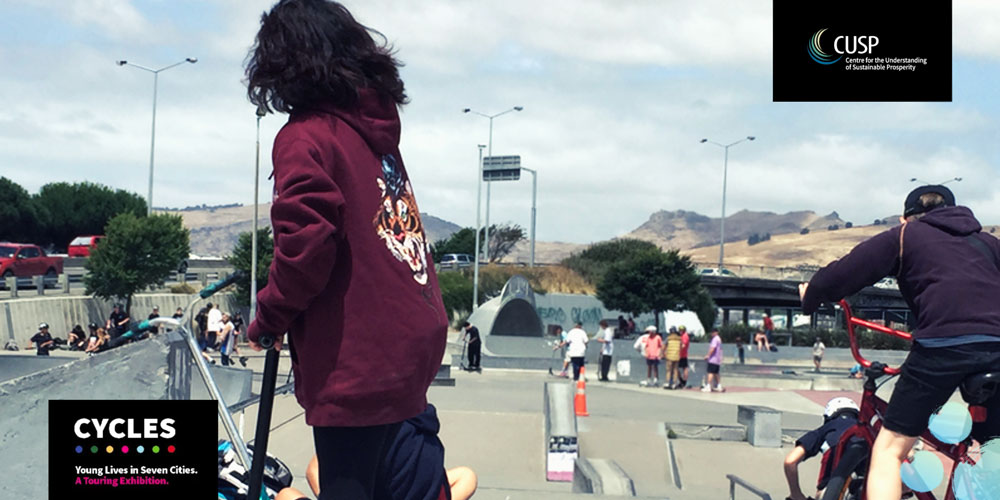
Thinking about what a community needs to do to support young citizens to live well is a key question that our international CYCLES study is exploring in seven cities around the globe. In this blog, CUSP research fellow Dr Kate Prendergast is summarising early learnings from the research in Christchurch Ōtautahi that asked 12-24 year olds what they like and would like to change about living in their city.

Since the 1990s, knowledge—or ‘human capital’—has been widely understood as the central factor underpinning growth and competitiveness in advanced post-industrial economies. Yet, no one has known how to measure it. Recent efforts to develop monetary estimates of human capital are deeply problematic, however, because they capture only a narrow measure of value, and push countries with supposed deficits of human capital towards market-oriented welfare and labour market policies.

Language and words are significant as vehicles for articulating new ideas and provoking transformative action. Linguistic analysis shows how influential the Green Party has been in presenting alternatives to the idea that economic growth based on unlimited use of New Zealand’s natural resources is a sustainable option. This blog first appeared on The Conversation.
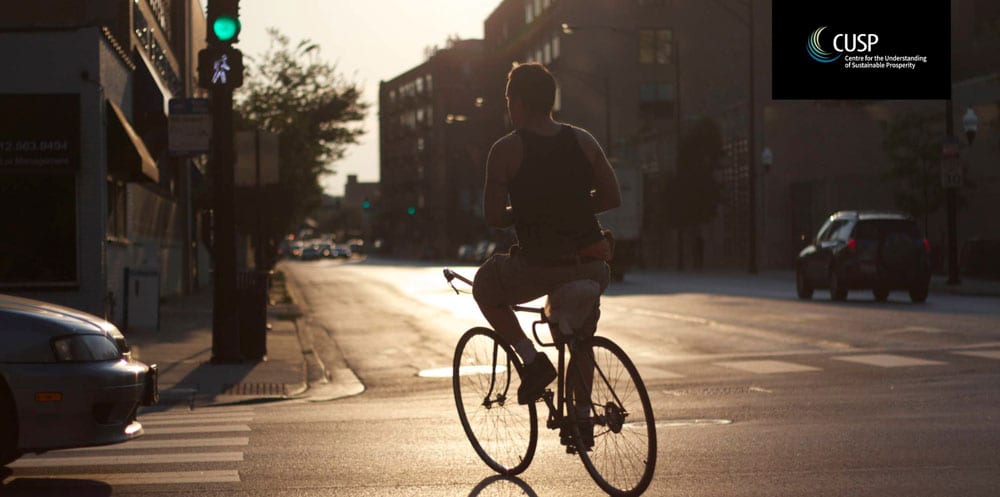
In her new book, Post-Growth Living: For an Alternative Hedonism, Kate Soper calls for a vision of the good life not reliant on endless economic growth and points us to the ways in which our current patterns of living are not only environmentally harmful, but also make us miserable. A provocative and necessary book, Nick Taylor writes, that provides us with the means to rethink consumption, work and sustainable prosperity without losing sight of what makes us feel good.

As people around the world look for alternative enterprise ideas, a new journal paper shows how a Massive Open Online Course (MOOC) has been reaching over 180 countries with participants sharing the ideas further into their own networks.
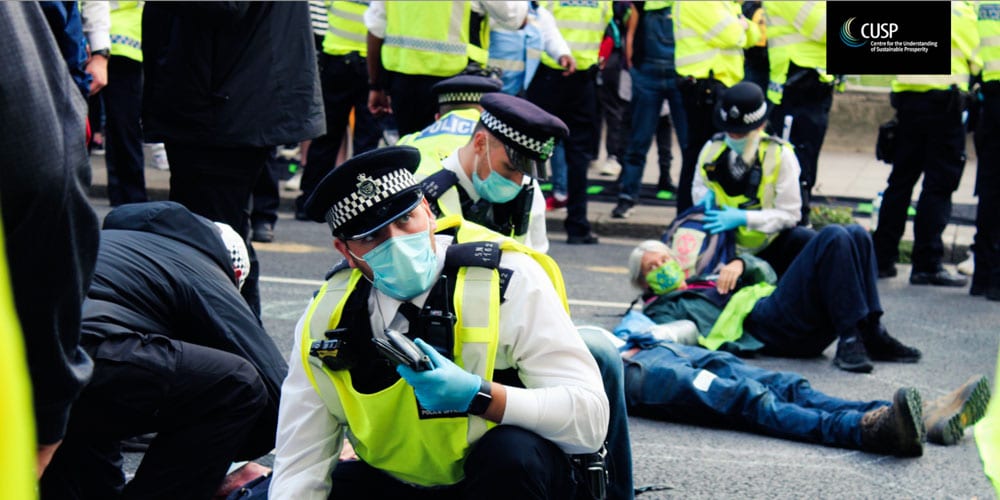
In the first week of September, XR used similar civil disobedience tactics to its two Rebellions last year—but this time the Met’s policing, on the streets at least, was rapid and effective. Here, CUSP fellow Graeme Hayes reflects on the problems of maintaining ‘accountable’ mass civil disobedience, and argues that XR now has the opportunity to focus on movement-building, rather than mass mobilisations.

If Mary Douglas was alive today, what would she say about Instagram? And how could her insights be useful in relation to sustainability? Here, CUSP researcher Anastasia Loukianov is summarising the tentative answers to these questions provided in her latest article with Kate Burningham and Tim Jackson.

With the long-term impact of the current crisis on global economies yet to be understood, a vast number of social enterprises are likely to suffer after the lockdown due to severe constraints to their operations. What will this mean for alternative business in Nigeria and how can one prepare their organisation for this new reality? A recent CUSP workshop engaged with social entrepreneurs, reflecting on their strategies. Here, Adeyemi and colleagues are summarising the learnings.
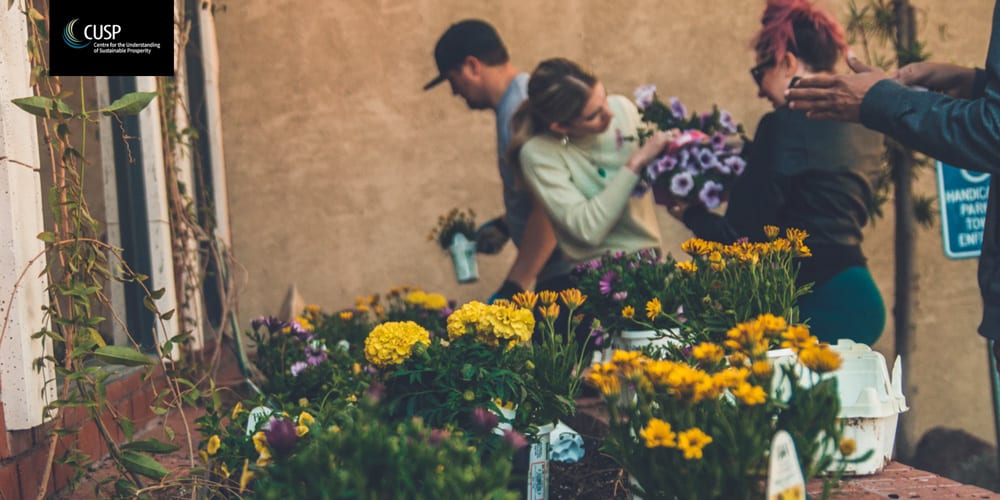
In order to live well within the earth’s limits we need to prioritise ways of living that enable us to have more fun with less stuff. This will inevitably require an end to the pursuit of ever more material possessions as a means of acquiring ‘the good life’. Given the fact that people who prioritise materialistic pursuits are consistently found to have lower wellbeing and higher ecological footprints, our research asked whether it is possible to intervene to reduce materialism?

Sustainable prosperity must encompass human flourishing within the ecological limits of a finite planet. But to what extent can sustainable wellbeing be achieved alongside personal values focused on money, image and consumer goods?—Amy Isham summarising her recent journal article with Birgitta Gatersleben and Tim Jackson.

The worldwide Covid-19 pandemic has countless downsides. But, is there perhaps somewhere, somehow, something we can learn in all this? Patrick Elf and Caroline Verfuerth together with Carla Pesas Gomes explore the potential impact of Covid-19 on sustainable consumption prospects in Brazil.
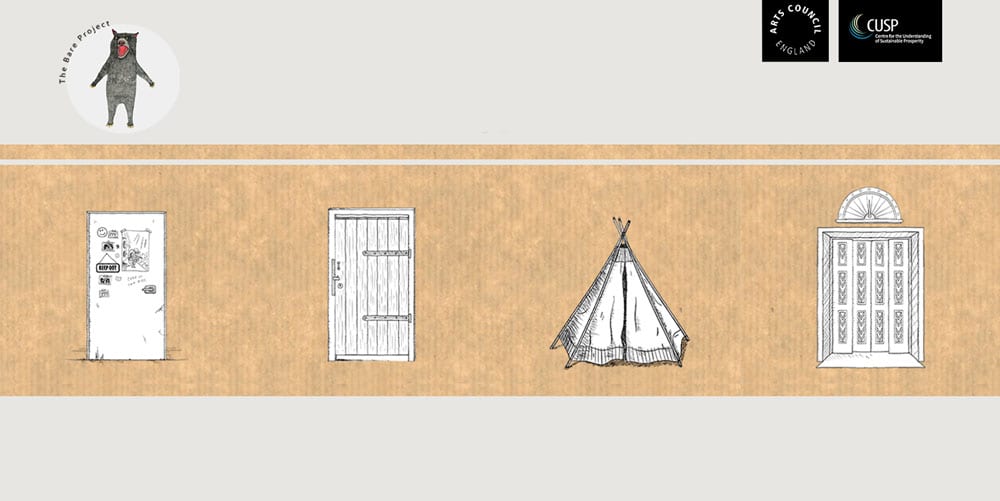
Led by the The Bare Project—a theatre and interactive arts company in Sheffield, the People’s Palace os Possibility has been developed since May 2019. Following the successful installation at last year’s Future Fantastic Festival, and to make the most of lockdown restrictions, the project has been adapted now to a mail-art/digital chapter—for Sheffield, Doncaster and Deptford.
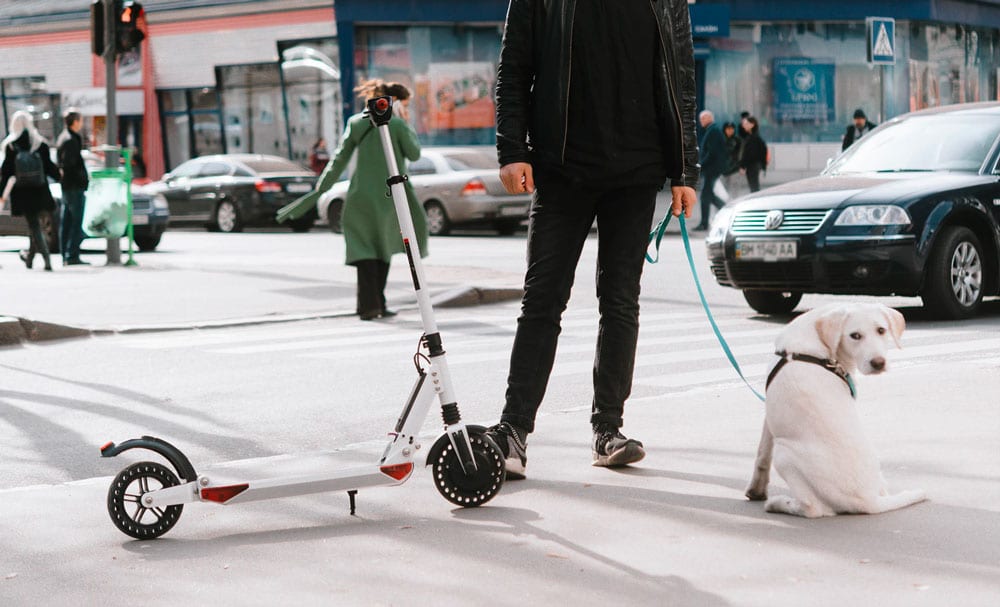
E-Scooters and e-bikes are coming to Britain’s streets. Given what we know about how legitimacy battles over new technology have played out in the past, it may be a bumpy ride, CUSP researcher Marc Hudson writes.

A recent study of long-term fluctuations in economic growth published in Nature Scientific Reports suggests both danger and opportunity in the emerging debate about post Covid-19 economic recovery. In this blog, Craig D. Rye and Tim Jackson outline the findings.

The corona pandemic has thrown down a challenge that is well beyond the scale of our normal experiences. How are community businesses able to deal with this crisis? In this joint blog, CUSP researchers together with colleagues from Locality, the national membership network for community organisations, are outlining some of the early frames of the joint research project looking at the idea of ‘good work’ in community business. This blog first appeared on the Power to Change website.
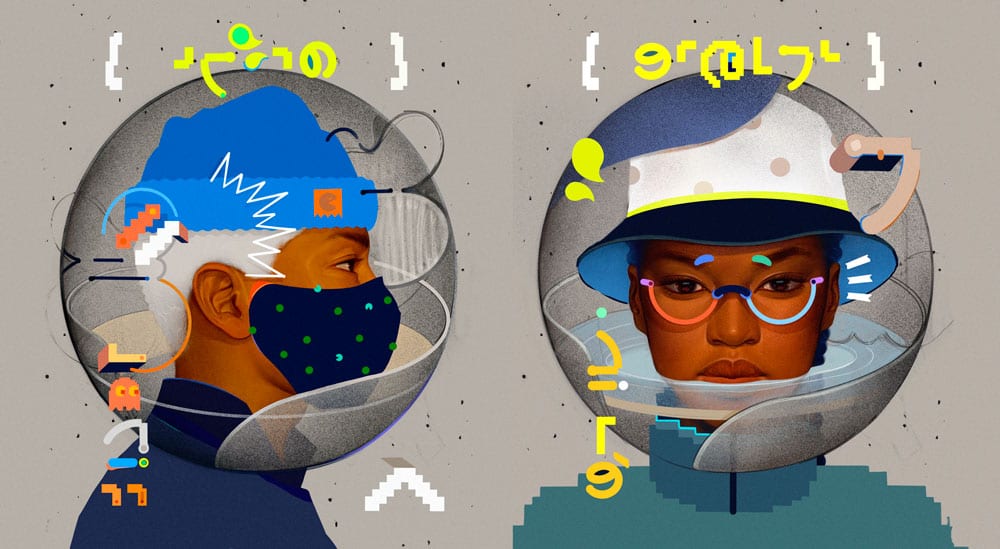
While practicing social distancing and the imposed isolation brought about by the COVID-19’s unanticipated extended stay, working on qualitative research projects is probably not the highest on people’s priority lists right now. Yet for the lucky ones, our work provides some sort of anchor. Here, CUSP doctoral researcher Joanna Kitchen is sharing some learnings.